Category: CPR Certification Guides

<span>Explore </span><span>CPR </span><span>certification </span><span>and </span><span>training </span><span>guides </span><span>from </span><span>Finish </span><span>Strong </span><span>CPR </span><span>& </span><span>Medical </span><span>Training. </span><span>Learn </span><span>about </span><span>American </span><span>Heart </span><span>Association </span><span>(AHA) </span><span>BLS, </span><span>ACLS, </span><span>PALS, </span><span>HeartCode </span><span>Complete, </span><span>self-guided </span><span>CPR </span><span>training, </span><span>First </span><span>Aid, </span><span>AED </span><span>certification, </span><span>and </span><span>renewal </span><span>requirements. </span><span>Find </span><span>helpful </span><span>resources </span><span>for </span><span>healthcare </span><span>professionals, </span><span>nursing </span><span>students, </span><span>and </span><span>businesses </span><span>throughout </span><span>Florida, </span><span>including </span><span>Orlando, </span><span>West </span><span>Palm </span><span>Beach, </span><span>Stuart, </span><span>and </span><span>Port </span><span>St. </span><span>Lucie.</span>

How to Choose an AHA ACLS Course in Florida

Searching for ACLS certification in Florida can bring up classroom courses, online programs, skills-only appointments, and self-guided training. The right choice depends on the credential you need, what you have already completed, and how you prefer to learn.

Before comparing appointment times, confirm that the course will meet your employer’s requirements and that you understand everything included in the registration.

What is ACLS certification?

ACLS stands for Advanced Cardiovascular Life Support. It builds on Basic Life Support skills and emphasizes effective response to cardiovascular emergencies, high-quality CPR, and coordinated resuscitation teams.

An AHA ACLS Provider eCard is valid for two years after successful course completion. cpr.heart.org

ACLS may be required for particular clinical roles, but it is not automatically required for every healthcare worker. Check the requirements for your position, department, or training program.

Understand the three training formats

Instructor-led classroom training brings learners together with an instructor for teaching, practice, and assessment. This may appeal to someone who wants live discussion throughout the learning experience.

Blended learning combines HeartCode ACLS online coursework with a subsequent hands-on session.

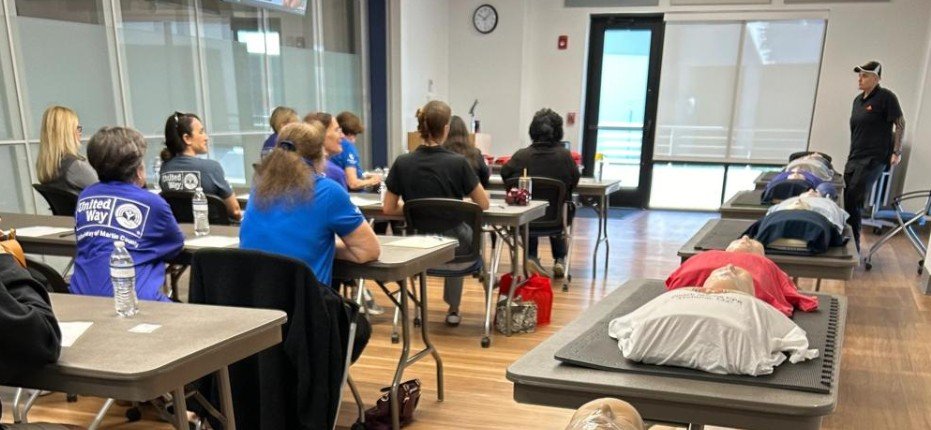
Self-guided learning combines online education with practical skills verification at an approved CPR Verification Station. The station provides feedback during the skills process. cpr.heart.org

When comparing courses, ask which format is being offered. “Online ACLS” is not a complete description of what you will need to do.

Can you complete AHA ACLS entirely online?

You can complete the cognitive portion online, but an online completion record alone is not the final AHA ACLS Provider eCard. The required practical component must also be completed successfully. cpr.heart.org

Before purchasing an online course, find out where and how you will complete the hands-on portion. This is particularly useful if you live some distance from a training location or need to coordinate travel around shifts.

Compare the complete booking, not just the advertised price

A lower advertised price may cover only one component of training. Before paying, check:

  • Does registration include the online coursework?
  • Is the hands-on session included or purchased separately?
  • Which organization issues the final credential?
  • What documentation must you bring?
  • Where does the practical session take place?
  • What happens if you need additional practice or rescheduling?

These questions help you compare equivalent options and avoid discovering a missing requirement after purchase.

How much time should you allow?

Completion time varies by course format, experience, and performance. Self-paced training allows flexibility, but it still requires time and attention.

Do not confuse the length of a station appointment with the total time needed for online coursework, preparation, and hands-on assessment. The AHA specifically notes that self-guided ACLS timing varies with the learner’s experience. cpr.heart.org

If this is your first ACLS course, ask the provider about preparation and available support before selecting a format.

Where does Finish Strong offer ACLS in Florida?

Finish Strong CPR & Medical Training currently offers ACLS options at four Florida locations:

  • Orlando
  • Port Saint Lucie
  • Stuart
  • West Palm Beach/Lake Park

Providers traveling from other Florida communities, including Fort Pierce and Palm Bay, should review the current station addresses and appointment availability before registering. Finish Strong CPR

Choose a location based on your actual travel plans and schedule. A statewide search result does not necessarily mean a provider has a station in your city.

Choose your course with confidence

Start with your employer’s credential requirement, decide whether you need the complete package or skills only, and select a training format that supports your learning needs.

Explore Finish Strong’s ACLS course options or review the Florida training locations.

ACLS Certification for Fort Pierce Healthcare Providers

Healthcare providers in Fort Pierce can complete AHA ACLS training through online HeartCode coursework followed by hands-on skills at Finish Strong CPR & Medical Training’s Port Saint Lucie station. This option allows you to complete the learning portion around your schedule before attending your practical appointment.

Whether you are preparing for a new position or approaching your renewal deadline, start by confirming the credential your employer requires and choosing the correct registration option.

Who needs ACLS in Fort Pierce?

Advanced Cardiovascular Life Support, or ACLS, is designed for healthcare professionals who participate in managing cardiac arrest and other cardiovascular emergencies. It is commonly relevant to emergency department nurses, critical care clinicians, physicians, paramedics, and other professionals whose responsibilities include resuscitation.

Your employer determines whether ACLS is required for your position. Before registering, check whether your onboarding or renewal instructions specifically require an American Heart Association ACLS Provider eCard. cpr.heart.org

Where can Fort Pierce providers complete their training?

Finish Strong’s current option for providers traveling from Fort Pierce is its Port Saint Lucie training station:

1680 SW Bayshore Blvd, Suite 102
Port Saint Lucie, FL 34984

This is a Port Saint Lucie location serving providers from surrounding communities; it is not a Fort Pierce station. Review the available appointment times and plan your travel before booking. Finish Strong CPR

How does the ACLS station pathway work?

The process combines online learning with in-person skills verification:

  1. Choose the appropriate course package. Select online coursework plus skills if you need both components.
  2. Complete the assigned HeartCode ACLS coursework. Allow enough time to work through the material before your appointment.
  3. Attend your hands-on session. Follow your confirmation instructions and complete the required skills assessment.
  4. Receive your eCard after successful completion. Finish Strong offers same-day AHA eCards once all course requirements are met. Finish Strong CPR & Medical Training

Online coursework alone does not complete the certification. The hands-on component remains part of the AHA training pathway. cpr.heart.org

Should you book ACLS skills only?

Skills-only registration may be appropriate if you have already completed the required AHA HeartCode ACLS online portion.

Before purchasing, confirm that you have the correct course completion documentation. A certificate from a different online training company should not be assumed to satisfy the HeartCode prerequisite.

If you have not completed the online portion, select the combined online-and-skills option. Finish Strong’s registration instructions distinguish between these two bookings. Locations Throughout Florida

How should you prepare?

Review your course instructions before the appointment rather than waiting until you arrive. Have your required completion documentation available, check the address and access instructions, and wear clothing that allows you to perform hands-on skills comfortably.

If your employer has a submission deadline, schedule with enough time to complete the course and send in your updated card. An appointment reservation does not extend an expiring credential.

Book ACLS training near Fort Pierce

For Fort Pierce healthcare providers, completing the online learning before traveling to Port Saint Lucie can make the practical appointment easier to fit around work.

View Finish Strong’s ACLS online-and-skills options and select Port Saint Lucie to review availability.

How to Renew Your BLS Certification Before It Expires

An approaching BLS expiration date can create an avoidable problem when you are preparing for a new job, managing clinical requirements, or covering a busy work schedule.

Start by checking your current card, confirming your employer’s requirements, and allowing time to complete the required learning and skills assessment.

Whether you work in Stuart, Port Saint Lucie, West Palm Beach, Orlando, Fort Pierce, or Palm Bay, planning ahead gives you more flexibility and time to resolve questions before your deadline.

How often do you need to renew BLS?

AHA BLS course completion cards and Red Cross BLS certifications are valid for two years. Check the expiration information on your actual credential rather than relying on memory or an old registration email. cpr.heart.org

Your school or employer may require your card to remain valid throughout an assignment. For example, a clinical program may ask you to renew before a rotation starts if your certification would expire during that rotation.

What should you check before booking?

Confirm the required credential.
If your organization specifies AHA BLS, make sure the course you select issues that credential.

Check your submission deadline.
The date your employer needs your updated card may be earlier than the card’s expiration date.

Choose the correct registration option.
If you need both online coursework and hands-on skills, book the complete package. Skills-only registration is appropriate only when you have completed the accepted online component and meet the provider’s requirements.

These checks can prevent paying for the wrong course or arriving without the documentation needed to proceed.

What does BLS renewal involve?

Renewal requires demonstrating that you can still meet the course’s knowledge and practical skills requirements.

Depending on the provider and format, you may complete an instructor-led renewal course or a pathway combining online learning with hands-on assessment. Adaptive learning can adjust the educational experience to your knowledge, but it does not eliminate the practical component. cpr.heart.org

If you have not practiced recently, allow time to review and work on your skills. Choosing an appointment should account for the support and practice you need, as well as convenience.

What if your BLS card has already expired?

Contact your training provider to confirm the appropriate enrollment option. Do not assume you qualify for a particular shortened renewal course.

Also check with your employer or school about what an expired credential means for your work or clinical participation. Booking a future class does not itself renew your card.

Where can you renew with Finish Strong?

Finish Strong offers AHA BLS training at its current locations in:

  • Port Saint Lucie
  • Stuart
  • West Palm Beach/Lake Park
  • Orlando

Appointments are offered seven days a week, subject to availability. Fort Pierce residents can review the Port Saint Lucie station, while Palm Bay residents should check the current locations and select an appointment that works with their travel schedule. finishstrongcpr.com

Complete the assigned online learning before your skills appointment and review your arrival instructions in advance.

What should you do after renewing?

Once you receive your updated credential:

  1. Save a copy somewhere you can easily access.
  2. Submit it through your employer’s or school’s required process.
  3. Confirm that your record has been updated.
  4. Add reminders before the next expiration date.

Personal reminders at 90, 60, and 30 days before expiration can give you time to choose an appointment without a last-minute scramble.

For office managers, a staff tracker with each employee’s required credential, expiration date, and renewal status can help coordinate training before several cards expire at once.

Check Finish Strong’s BLS appointments or contact our team for help choosing the appropriate option.

Can You Get BLS Certified Online in Florida?

You can complete the coursework portion of many BLS programs online, but online coursework alone does not complete an AHA BLS Provider certification. You must also successfully complete the required hands-on skills component. cpr.heart.org

For healthcare workers balancing shifts in Orlando, West Palm Beach, Stuart, and Port Saint Lucie, this format can make training easier to schedule. It also gives students traveling from Fort Pierce or Palm Bay a way to complete the learning portion before visiting a training location.

What are the different BLS training formats?

Instructor-led classroom training

You complete instruction, practice, and testing with an instructor. This format may suit learners who prefer live explanations and opportunities to ask questions throughout the course.

Blended learning

You complete the online learning portion, such as HeartCode BLS, followed by the required hands-on skills session. The online and practical components together make up the certification pathway.

Self-guided learning

You complete online education and then practice and verify your skills at an approved CPR Verification Station. The equipment provides feedback as you work toward the required performance standards. cpr.heart.org

The key distinction is how instruction and assessment are delivered. Every option still requires successful completion of its practical skills requirements.

How long does BLS training take?

Course length depends on the format and your experience.

The AHA lists approximately 4.5 hours for its full instructor-led BLS course. HeartCode BLS online learning generally takes approximately one to two hours, with additional time for hands-on practice and assessment. Self-guided completion time varies by learner. cpr.heart.org

Finish Strong describes its station skills sessions as approximately 30–60 minutes. That is the hands-on portion—not the total time needed for both online coursework and skills completion. Allow additional time if you need more practice. finishstrongcpr.com

Should you book the complete course or skills only?

Choose your registration option based on what you have already completed:

  • Online coursework plus skills: Select this if you need both parts of your BLS training.
  • Skills only: Select this if you have already completed the appropriate HeartCode BLS online course and can provide the required completion documentation.

Finish Strong offers both options. Confirm that your online course meets the requirements before purchasing a skills-only appointment. finishstrongcpr.com

How should you prepare for your skills appointment?

A little preparation helps you arrive ready to train:

  1. Complete the assigned online coursework.
  2. Have your completion record available as instructed.
  3. Review the address, arrival instructions, and appointment time.
  4. Wear clothing that allows you to practice comfortably.
  5. Contact the training provider beforehand if you need accommodations.

Plan enough time to focus on your performance rather than rushing to finish before another commitment.

Where can you complete the hands-on portion?

Finish Strong’s current stations are in Port Saint Lucie, Stuart, West Palm Beach/Lake Park, and Orlando.

If you live in Fort Pierce, review Port Saint Lucie availability. If you live in Palm Bay, check the listed locations and travel requirements before booking. The Finish Strong locations page provides current station information. finishstrongcpr.com

Is the online completion certificate my BLS card?

Your online completion record confirms that you completed the coursework. Your BLS eCard follows successful completion of all required course components, including the hands-on assessment.

Finish Strong offers same-day AHA eCards after successful completion. finishstrongcpr.com

Choose your BLS online-and-skills or skills-only appointment.

What Is BLS Certification, and Who Needs It in Florida?

Basic Life Support (BLS) certification prepares healthcare professionals and first responders to recognize and respond to cardiac arrest, breathing emergencies, and severe airway obstruction. Training combines knowledge with hands-on practice so participants can perform essential lifesaving skills.

If you are starting a healthcare program, preparing for clinical rotations, or renewing an employment credential in Port Saint Lucie, Stuart, West Palm Beach, Orlando, Fort Pierce, or Palm Bay, understanding the requirements will help you choose the correct course.

Who needs BLS certification?

BLS is designed for healthcare professionals, trained first responders, and students entering healthcare fields. Common participants include:

  • Nurses and nursing students
  • Physicians and medical trainees
  • EMTs and paramedics
  • Dental professionals
  • Medical assistants and other clinical staff
  • Firefighters and public safety personnel whose roles require BLS

Your employer or school determines the credential you need. If your requirements specify American Heart Association BLS Provider certification, choose that course rather than assuming a general CPR certificate will qualify. cpr.heart.org

What does a BLS course cover?

BLS training focuses on recognizing an emergency, responding effectively, and working with other rescuers. Topics include:

  • Adult, child, and infant CPR
  • Early AED use
  • Breathing support, including bag-mask ventilation
  • Relief of severe airway obstruction
  • Single-rescuer and team response
  • Communication during resuscitation
  • Recognition and response to opioid-related emergencies

During an opioid emergency, naloxone does not replace necessary breathing support, CPR, or activation of emergency services. Training helps participants understand how these actions fit together. www.redcross.org

Hands-on practice connects what you learn with what you can perform. Recognizing the correct answer on a screen is only part of preparing to respond.

Do you have to pass a test?

BLS certification requires successful completion of the course’s learning and skills requirements.

For AHA instructor-led BLS, testing includes practical skills assessments and an exam with a minimum passing score of 84%. Other providers and adaptive online formats may use different assessment methods, so follow the requirements for your specific course. www.heart.org

How long does BLS certification last?

An AHA BLS Provider course completion card is valid for two years. Your employer or school may also require your certification to remain current throughout a clinical placement or work assignment. cpr.heart.org

Keep a copy of your eCard and record its expiration date as soon as you receive it.

Where can you get BLS certified in Florida?

Finish Strong CPR & Medical Training offers AHA BLS options at four current locations:

  • Port Saint Lucie
  • Stuart
  • West Palm Beach/Lake Park
  • Orlando

Healthcare workers and students in Fort Pierce can review appointments at the Port Saint Lucie station. Those in Palm Bay can check the current location list and choose an appointment that fits their travel plans. finishstrongcpr.com

Both the American Heart Association and American Red Cross offer BLS programs. Before registering, confirm which organization’s credential your employer accepts and select a course with the required hands-on component.

Explore Finish Strong’s AHA BLS courses and available appointments.

AHA BLS Certification in Stuart: What to Check Before You Book

Avoid booking the wrong CPR course. Use this Stuart BLS guide to check your requirements, select the right option, and prepare for your skills visit.

Finish Strong CPR & Medical Training

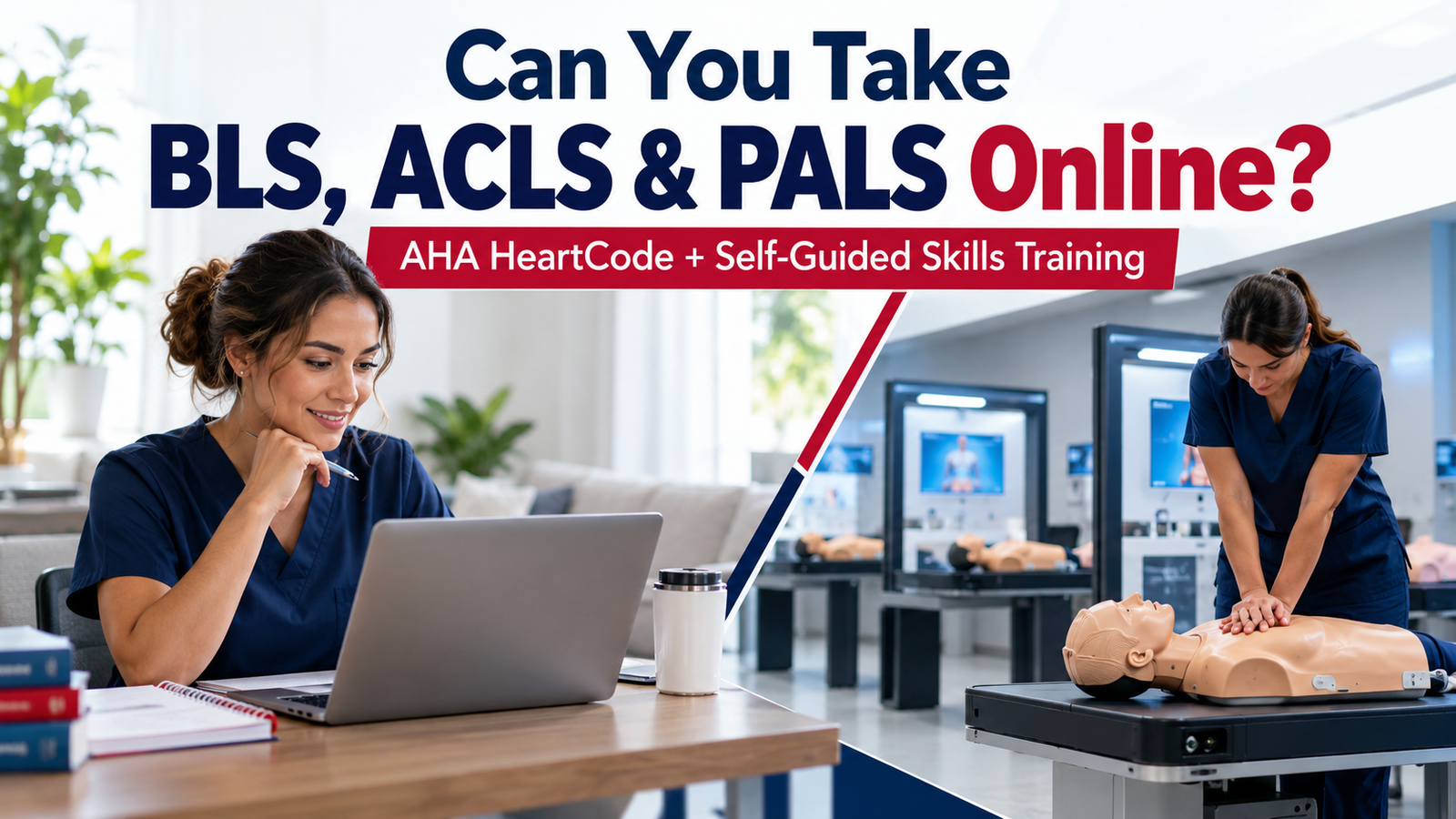
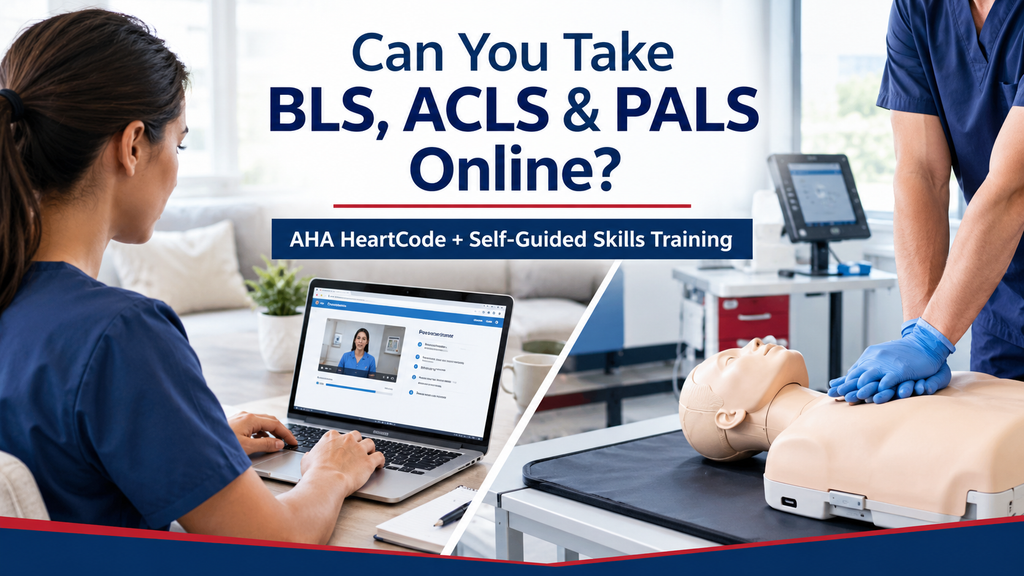
Can You Take BLS, ACLS and PALS Online? AHA HeartCode & Self-Guided Training Explained

Yes, you can complete BLS, ACLS and PALS coursework online—but official American Heart Association (AHA) certification also requires in-person hands-on skills verification.

For nurses, physicians, healthcare students, and first responders, maintaining current BLS ACLS PALS national certifications is essential. Finding time for traditional classroom training, however, can be challenging when balancing demanding schedules, rotating shifts, and professional responsibilities.

The American Heart Association is expanding access to resuscitation education through HeartCode Complete and Self-Guided Learning, a training model that combines online education with hands-on skills verification using advanced simulation technology.

In a March 4, 2026 press release, the American Heart Association announced the nationwide launch of Self-Guided Learning, developed in collaboration with Laerdal Medical.

The initiative is designed to make high-quality resuscitation training more accessible while maintaining the AHA’s established educational and skills verification standards.

Can You Get AHA BLS, ACLS or PALS Certification Completely Online?

Not entirely. While students can complete the educational portion of their certification online, the AHA requires successful hands-on skills verification to receive an official course completion eCard.

The good news is that hands-on training no longer has to mean attending a traditional, instructor-led classroom session.

The AHA offers three primary training formats:

  • Instructor-Led Training: Students complete learning and hands-on skills practice with an AHA Instructor.
  • Blended Learning: Students complete online coursework followed by an instructor-led skills session.
  • Self-Guided Learning: Students complete online education independently, followed by hands-on skills verification at an approved CPR Verification Station.

Each pathway is designed to meet different learning preferences and scheduling needs.

AHA Resource: Compare AHA CPR Training Formats

What Is AHA HeartCode Complete?

HeartCode Complete is the American Heart Association’s Self-Guided Learning program for healthcare professionals seeking BLS, ACLS, or PALS certification.

The program combines two required components:

Part 1: Online Learning

Students complete the appropriate AHA HeartCode course independently, using a compatible computer or device.

The online learning experience incorporates interactive content, clinical scenarios, knowledge assessments, and adaptive learning technology.

Part 2: Self-Guided Hands-On Skills Verification

After completing the online component, students attend a scheduled skills session at an approved CPR Verification Station learning center.

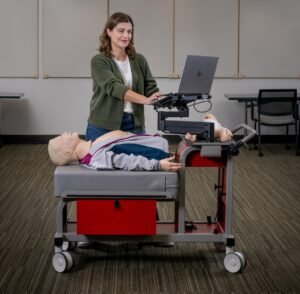
The station uses specialized manikins and technology to guide students through skills practice and testing, providing objective feedback throughout the experience.

Upon successful completion of all required components, students receive the appropriate official AHA HeartCode Complete course completion eCard.

AHA Resource: HeartCode Complete and Self-Guided Learning

How Does an AHA CPR Verification Station Work?

A CPR Verification Station allows students to complete required hands-on resuscitation skills using advanced simulation technology.

Rather than relying on traditional instructor-led practice, the system provides real-time audiovisual coaching and objective feedback.

Depending on the course, the technology evaluates essential skills such as:

  • Chest compression depth and rate
  • Proper chest recoil
  • Ventilation performance
  • Other course-specific resuscitation skills

Students receive feedback during practice and must successfully complete the required assessments.

This approach allows learners to progress independently while maintaining standardized skills verification.

The AHA and Laerdal Medical describe Self-Guided Learning as a way to increase access to quality training for healthcare professionals who need flexible scheduling options.

AHA Resource: Read the Official AHA and Laerdal Medical Announcement

Which Certifications Are Available Through HeartCode Complete?

Basic Life Support (BLS)

HeartCode Complete BLS is designed for healthcare professionals and students who need to demonstrate essential lifesaving skills.

Training focuses on recognizing life-threatening emergencies, performing high-quality CPR, delivering appropriate ventilations, and using an automated external defibrillator (AED).

BLS certification is commonly required for nurses, nursing students, medical assistants, emergency responders, and other healthcare personnel.

AHA Resource: Basic Life Support Course Options

Advanced Cardiovascular Life Support (ACLS)

HeartCode Complete ACLS builds upon BLS knowledge and focuses on managing adult cardiovascular emergencies.

Course topics include cardiac arrest management, rhythm recognition, airway management, and advanced resuscitation concepts.

ACLS training is commonly required for healthcare professionals working in emergency departments, critical care, and other acute care settings.

AHA Resource: Advanced Cardiovascular Life Support Course Options

Pediatric Advanced Life Support (PALS)

HeartCode Complete PALS focuses on recognizing and responding to life-threatening emergencies involving infants and children.

The course addresses pediatric respiratory emergencies, shock, arrhythmias, and resuscitation principles.

PALS is especially relevant for healthcare professionals working in pediatrics, emergency medicine, and pediatric critical care.

AHA Resource: PALS Course Options

How Long Does Online BLS, ACLS and PALS Training Take?

HeartCode courses use adaptive learning technology, so completion times vary depending on the student’s experience, knowledge, and individual learning needs.

For scheduling purposes, students may wish to allow:

CourseSuggested Online Study Time
BLSApproximately 2–3 hours
ACLSApproximately 3–5 hours
PALSApproximately 3–5 hours

These are general planning estimates, not guaranteed completion times.

Students should complete their assigned online coursework before attending their scheduled hands-on skills session.

Is HeartCode Complete an Official AHA Certification?

Yes. HeartCode Complete is an official American Heart Association training pathway.

Students who successfully complete the required online education and hands-on skills verification receive the applicable AHA HeartCode Complete Provider eCard, generally valid for two years.

As with any professional certification, students should confirm that the specific credential and training format satisfy their employer’s, school’s, or licensing organization’s requirements.

AHA BLS, ACLS and PALS Certification in Orlando, Florida

Healthcare professionals searching for BLS, ACLS, or PALS certification in Orlando can complete their online HeartCode education independently and schedule hands-on skills training at Finish Strong CPR & Medical Training.

Our Orlando training center is conveniently located near John Young Parkway in the 32819 area:

Finish Strong CPR & Medical Training – Orlando

8810 Commodity Circle, Suite 36
Orlando, FL 32819

Our location serves healthcare professionals, nursing students, and first responders throughout Orlando and surrounding Central Florida communities.

Students can schedule a skills appointment based on availability rather than waiting for a traditional classroom course date.

This flexible format is especially useful for professionals managing rotating shifts, certification renewal deadlines, or school and employment requirements.

Additional AHA Training Locations in Florida

Finish Strong CPR & Medical Training also offers training appointments at locations in:

  • West Palm Beach / Lake Park: Serving Palm Beach County and surrounding communities.
  • Stuart: Convenient for Martin County healthcare professionals and students.
  • Port St. Lucie: Serving St. Lucie County and the Treasure Coast.

Each location provides flexible training options designed to accommodate busy schedules.

Who Benefits From Self-Guided AHA BLS ACLS and PALS Training?

HeartCode Complete is particularly useful for:

  • Nurses and nursing students
  • Physicians and advanced practice providers
  • EMTs and paramedics
  • Respiratory therapists
  • Allied healthcare professionals
  • Healthcare organizations managing employee certification requirements

For employers, flexible scheduling can help reduce the challenges associated with coordinating group classroom sessions and maintaining current staff credentials.

For individuals, the ability to complete coursework at home and schedule a separate skills appointment provides greater control over the learning experience.

Frequently Asked Questions

Can I complete BLS certification online without a skills test?

No. An official AHA BLS Provider course completion eCard requires successful completion of both the knowledge and hands-on skills components.

Do I need an instructor present for HeartCode Complete?

HeartCode Complete Self-Guided Learning uses approved CPR Verification Station technology to guide skills practice and testing without traditional instructor oversight.

Can I renew ACLS or PALS through HeartCode Complete?

Yes. HeartCode Complete offers training options for eligible initial and renewal learners.

Will I receive an official American Heart Association eCard?

Yes. Students who successfully complete all required components of the approved course receive the corresponding official AHA course completion eCard.

How long is HeartCode Complete certification valid?

AHA HeartCode Complete BLS, ACLS, and PALS Provider eCards are generally valid for two years.

Is there an AHA CPR training center near John Young Parkway in Orlando?

Finish Strong CPR & Medical Training offers scheduled training appointments at 8810 Commodity Circle, Suite 36, Orlando, FL 32819, near the John Young Parkway area.

The Future of AHA Certification Is More Flexible

The American Heart Association’s expansion of Self-Guided Learning represents an important development in resuscitation education.

By combining online coursework with hands-on skills verification, HeartCode Complete provides healthcare professionals with an alternative to traditional classroom scheduling without eliminating essential practical training.

At Finish Strong CPR & Medical Training, we are proud to make innovative AHA training technology accessible to healthcare professionals throughout Orlando, West Palm Beach, Stuart, and Port St. Lucie.

Ready to complete your BLS, ACLS, or PALS certification?

Explore available appointments and choose the training center that works best for your schedule.

Find Your Training Location & Register

BLS Certification for Nursing Students: What You Need Before Clinicals

    nursing cpr instructor demonstration simulation to students    

BLS Certification for Nursing Students: What You Need Before Clinicals

Starting nursing school clinicals is exciting, but it also comes with a long list of requirements. One of the most common is BLS certification for nursing students.

Before you register for just any CPR class, make sure you know exactly which certification your nursing program or clinical site requires.

Many healthcare programs require American Heart Association (AHA) BLS Provider certification before students can begin clinical rotations.

Here is what nursing students should know before getting certified.

Finish Strong CPR & Medical Training provides AHA BLS training options for nursing and healthcare students in Orlando, West Palm Beach, Port Saint Lucie, and Stuart, Florida.

What BLS Certification Do Nursing Students Need?

Blended Learning CPR Station

Nursing students commonly need BLS Provider certification designed for healthcare professionals.

BLS stands for Basic Life Support.

BLS training prepares healthcare professionals and students to respond to cardiac arrest, respiratory arrest, choking, and other life-threatening emergencies.

However, not every CPR certification is interchangeable.

Your nursing program may specifically require an American Heart Association BLS Provider certification.

Before registering, check your school’s requirements carefully.

Is CPR Certification the Same as BLS Certification?

Not necessarily.

This is an important distinction for nursing students.

A general CPR/AED course may be appropriate for teachers, coaches, workplaces, or members of the public but may not satisfy a nursing program’s healthcare-provider BLS requirement.

BLS training is specifically designed for healthcare professionals and students entering healthcare environments.

If your paperwork says BLS Provider, don’t assume that a general CPR certification will be accepted.

Why Do Nursing Students Need BLS Before Clinicals?

Clinical rotations place nursing students in real healthcare environments where emergencies can occur.

BLS prepares students to recognize and respond to life-threatening situations while functioning effectively as part of a healthcare team.

Training includes skills such as:

  • High-quality CPR
  • AED use
  • Adult, child, and infant resuscitation
  • Ventilation
  • Choking response
  • Team-based resuscitation
  • Recognition of cardiac arrest

These are foundational skills for healthcare professionals.

What Should You Expect During BLS Training?

BLS training combines knowledge with hands-on skills.

Students should expect to practice CPR, ventilation, AED use, and team-based resuscitation.

Depending on the course format, training may be completed through a traditional instructor-led course or an approved blended-learning option that combines online coursework with hands-on skills.

The important part is making sure the final credential satisfies your nursing program’s requirements.

Can Nursing Students Take BLS Online?

Part of your BLS training may be available online through an approved blended-learning program.

For example, AHA HeartCode BLS combines online coursework with a required hands-on skills component.

This can be especially convenient for nursing students balancing classes, studying, work, and clinical preparation.

However, be careful with websites advertising “100% online BLS certification.”

If your nursing school requires an AHA BLS Provider credential, an unrelated online-only CPR certificate may not be accepted.

Verify the credential before paying for a course.

How Long Does BLS Certification Last?

American Heart Association BLS Provider course completion cards are valid for two years through the end of the month in which they were issued.

That means many nursing students can use the same certification through multiple semesters of their program.

However, if your BLS expires while you are enrolled, your school or clinical site may require you to renew it before continuing clinical rotations.

Keep track of your expiration date.

When Should You Get BLS Certified Before Clinicals?

Do not wait until the night before your paperwork is due.

Nursing programs may require proof of certification before allowing students to participate in clinical rotations.

Give yourself enough time to:

  • Complete any required online coursework
  • Complete your hands-on skills training
  • Receive your certification
  • Submit documentation to your nursing program

Getting certified early eliminates one more problem during an already busy semester.

What Should Nursing Students Bring to BLS Training?

Follow the instructions provided by your training center.

If you are completing a blended-learning course, make sure all required online coursework is completed before your hands-on appointment.

You may also need to provide proof of course completion before beginning the skills portion.

Wear comfortable clothing because BLS requires hands-on CPR practice.

Common BLS Mistakes Nursing Students Should Avoid

Choosing the Wrong CPR Course

Do not register for a course simply because it says “CPR certification.”

Check whether your program specifically requires AHA BLS Provider certification.

Waiting Until the Last Minute

Clinical deadlines arrive quickly.

Waiting can leave you scrambling for an appointment when other students are trying to meet the same deadline.

Choosing an Online-Only Certification Without Checking

A cheap online certificate is not a bargain if your nursing program refuses to accept it.

Verify the issuing organization and course requirements first.

Forgetting Your Expiration Date

BLS certification does not last throughout an entire healthcare career.

Keep your certification expiration date somewhere you will actually see it.

BLS Certification for Nursing Students in Orlando, West Palm Beach, Port Saint Lucie & Stuart

Finish Strong CPR & Medical Training provides American Heart Association BLS training options for nursing students and healthcare professionals throughout Florida.

BLS Certification for Nursing Students in Orlando

Nursing and healthcare students in Central Florida can access AHA BLS training through our Orlando training location.

Students can complete required BLS certification while preparing for clinical rotations, healthcare employment, or program requirements.

BLS Certification for Nursing Students in West Palm Beach

Our West Palm Beach-area training location in Lake Park provides AHA BLS training options for nursing and healthcare students throughout Palm Beach County.

BLS Certification for Nursing Students in Port Saint Lucie

Nursing students throughout the Treasure Coast can access AHA BLS training at our Port Saint Lucie training location.

This provides a convenient option for students preparing for clinical requirements or healthcare employment.

BLS Certification for Nursing Students in Stuart

Our Stuart training location serves nursing and healthcare students throughout Stuart, Martin County, and surrounding communities.

Students can complete AHA BLS training before beginning clinical rotations or when an existing certification needs renewal.

Do Nursing Students Need ACLS or PALS?

Most nursing students should follow the specific requirements provided by their program.

BLS is a common foundational requirement, while ACLS or PALS may be required later depending on the nursing program, clinical placement, specialty, or employer.

Do not purchase additional certifications simply because you think you might need them.

Check your school’s requirements first.

As your nursing career progresses, certifications such as ACLS and PALS may become important for emergency, critical care, pediatric, and other specialized clinical roles.

Get BLS Certified Before Your Nursing Clinicals

Your clinical requirements are stressful enough. Your BLS certification should not be.

Finish Strong CPR & Medical Training provides American Heart Association BLS training for nursing students in Orlando, West Palm Beach, Port Saint Lucie, and Stuart, Florida.

Check your nursing program’s requirements, choose the correct BLS course, and complete your certification before your clinical deadline.

Need BLS for nursing school? Schedule your AHA BLS training with Finish Strong CPR & Medical Training.

Frequently Asked Questions About BLS for Nursing Students

What BLS certification do nursing students need?

Many nursing programs require American Heart Association BLS Provider certification. Always verify your individual school’s requirements before registering.

Can I take BLS online for nursing school?

AHA HeartCode BLS combines online learning with a hands-on component. Check with your nursing program to confirm which course formats it accepts.

How long does BLS certification last?

AHA BLS Provider course completion cards are valid for two years through the end of the month in which they were issued.

Is CPR certification enough for nursing school?

Not necessarily. A general CPR course may not satisfy a program that specifically requires healthcare-provider BLS certification.

When should I get BLS before clinicals?

Complete your BLS certification well before your program’s documentation deadline so you have enough time to finish all requirements and submit your credential.

Where can nursing students get BLS certified in Florida?

Finish Strong CPR & Medical Training provides AHA BLS training options in Orlando, West Palm Beach, Port Saint Lucie, and Stuart, Florida.

PALS Certification: Who Needs It, How Long It Lasts & What to Expect

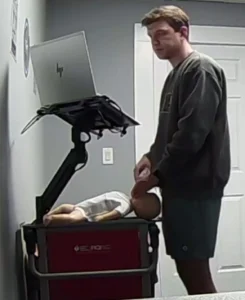
   AHA PALS Self Guided Certification

PALS Certification: Who Needs It, How Long It Lasts & What to Expect

If you work with infants or children in a healthcare setting, PALS certification may be required for your job, clinical program, or hospital privileges.

Pediatric Advanced Life Support (PALS) prepares healthcare professionals to recognize and respond to serious respiratory, circulatory, and cardiac emergencies involving pediatric patients.

But who needs PALS certification? How long does it last? What happens during the course? And can you complete part of PALS online?

Here is what healthcare professionals should know before registering.

Finish Strong CPR & Medical Training provides American Heart Association BLS, ACLS, and PALS training options for healthcare professionals in Orlando, West Palm Beach, Port Saint Lucie, and Stuart, Florida.

What Is PALS Certification?
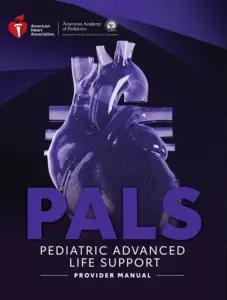
The American Heart Association PALS Provider Manual

PALS stands for Pediatric Advanced Life Support.

PALS training is designed for healthcare professionals who may participate in the assessment and management of critically ill infants and children.

The course builds on foundational resuscitation skills and emphasizes a systematic approach to pediatric emergencies.

Training addresses topics such as:

  • Pediatric assessment
  • Respiratory emergencies
  • Respiratory failure
  • Shock
  • Cardiac arrest
  • Pediatric arrhythmias
  • High-quality CPR
  • Effective resuscitation team dynamics
  • Post-cardiac arrest care

The goal is not simply to memorize algorithms.

PALS helps healthcare professionals recognize when a pediatric patient is deteriorating and respond appropriately before the situation progresses.

Who Needs PALS Certification?

PALS certification is generally intended for healthcare professionals who respond to emergencies involving infants and children.

Depending on the employer and clinical role, PALS may be required for:

  • Registered nurses
  • Physicians
  • Paramedics
  • Nurse practitioners
  • Physician assistants
  • Respiratory therapists
  • Emergency department personnel
  • Pediatric healthcare professionals
  • Critical care professionals
  • Other clinicians involved in pediatric emergency care

Whether you personally need PALS depends on your employer, healthcare facility, clinical program, or professional responsibilities.

Always verify the specific certification required for your position before registering.

How Long Does PALS Certification Last?

American Heart Association PALS Provider course completion cards are valid for two years through the end of the month in which the card was issued.

Check the expiration date listed on your AHA eCard and plan your renewal before it expires.

Healthcare employers may have their own policies regarding certification deadlines, so waiting until the final days of your certification period can create unnecessary stress.

If your PALS certification is approaching expiration, begin looking at renewal options early.

Is PALS the Same as BLS?

No.

PALS and BLS are separate certifications with different objectives.

BLS focuses on fundamental lifesaving skills, including high-quality CPR, AED use, ventilation, choking response, and team-based resuscitation.

PALS applies advanced assessment and resuscitation concepts specifically to critically ill or injured pediatric patients.

Healthcare professionals who require PALS commonly also need to maintain current BLS certification.

Check both credentials rather than assuming that having PALS replaces your BLS requirement.

Is PALS the Same as ACLS?

No.

ACLS and PALS are both advanced life support courses, but they focus on different patient populations and clinical situations.

ACLS focuses primarily on cardiovascular emergencies involving adult patients.

PALS focuses on the recognition and management of serious emergencies involving infants and children.

Some healthcare professionals may need BLS, ACLS, and PALS depending on their clinical responsibilities.

Emergency department clinicians, critical care providers, paramedics, and other professionals who treat patients across multiple age groups may be among those required to maintain multiple credentials.

What Should You Expect During PALS Training?

PALS requires more than memorizing pediatric algorithms.

Students should be prepared to apply a systematic approach to assessing and managing pediatric emergencies.

Topics may include:

  • Pediatric assessment
  • Recognition of respiratory distress and respiratory failure
  • Recognition and management of shock
  • Pediatric cardiac arrest
  • Bradycardia
  • Tachycardia
  • High-quality pediatric CPR
  • Airway and ventilation
  • Team dynamics
  • Effective communication during resuscitation

The course emphasizes recognizing deterioration and intervening appropriately.

That distinction is particularly important in pediatrics because respiratory failure and shock can precede cardiac arrest.

What Skills Should You Know Before PALS?

Preparation can make PALS training significantly more manageable.

Healthcare professionals should be comfortable with foundational BLS concepts and review any required pre-course material before training.

Important areas include:

Pediatric Assessment

PALS emphasizes systematic assessment.

Students should be prepared to evaluate a pediatric patient’s appearance, breathing, circulation, vital signs, and clinical condition.

High-Quality CPR

Strong BLS skills remain essential.

Be prepared to demonstrate appropriate CPR techniques for infants and children and understand how pediatric resuscitation differs from adult resuscitation.

Respiratory Emergencies

Respiratory problems are an important component of pediatric emergency care.

Understanding the progression from respiratory distress to respiratory failure can help clinicians recognize when more aggressive intervention is needed.

Shock

Students should understand the recognition and management of different types of shock and how poor perfusion may present in pediatric patients.

Pediatric Rhythms

PALS includes the recognition and management of clinically significant pediatric bradycardia, tachycardia, and cardiac arrest rhythms.

Team Dynamics

Effective pediatric resuscitation requires strong communication.

Healthcare professionals should be prepared to participate as both team members and leaders during simulated scenarios.

Can You Get PALS Certification Online?

The American Heart Association offers blended-learning options that combine online education with a required hands-on component.

This allows healthcare professionals to complete part of the educational content independently before completing hands-on skills training.

However, be cautious when searching for “100% online PALS certification.”

If your employer requires an American Heart Association PALS Provider credential, verify exactly what certification a course provides before paying for it.

An unrelated online-only certificate may not satisfy your employer’s requirements.

PALS Certification in Orlando, West Palm Beach, Port Saint Lucie & Stuart

Convenient training matters when you are balancing clinical shifts, family responsibilities, credentialing deadlines, and other professional obligations.

Finish Strong CPR & Medical Training provides AHA training options at locations serving healthcare professionals across Florida.

PALS Certification in Orlando

Healthcare professionals in Central Florida can access training through our Orlando training location.

The Orlando location provides a convenient option for nurses, physicians, paramedics, respiratory therapists, healthcare students, and other professionals who need BLS, ACLS, or PALS certification.

PALS Certification in West Palm Beach

Our West Palm Beach-area training location in Lake Park serves healthcare professionals throughout Palm Beach County.

Healthcare professionals can access AHA BLS, ACLS, and PALS training options while staying closer to work or home.

PALS Certification in Port Saint Lucie

Our Port Saint Lucie training location serves nurses, healthcare professionals, EMS providers, and students throughout Port Saint Lucie and the surrounding Treasure Coast.

If PALS is required for your position, plan your certification or renewal before you are facing an employment or credentialing deadline.

PALS Certification in Stuart

Our Stuart training location serves healthcare professionals throughout Stuart, Martin County, and surrounding Treasure Coast communities.

Healthcare professionals can access BLS, ACLS, and PALS training options through Finish Strong CPR & Medical Training.

When Should You Renew PALS Certification?

Do not wait for your PALS certification to expire before thinking about renewal.

Check the date on your AHA eCard and review any employer-specific requirements.

Healthcare professionals who maintain several certifications should consider checking all of their expiration dates together.

That may include:

  • BLS
  • ACLS
  • PALS
  • CPR/AED
  • First Aid

Staying ahead of expiration dates can prevent the scramble to find a course immediately before a credentialing deadline.

Why Healthcare Professionals Choose Finish Strong CPR

Certification needs to be efficient, but efficiency should not come at the expense of quality.

Finish Strong CPR & Medical Training focuses on helping healthcare professionals build both competence and confidence while completing required training.

Our training options include:

  • American Heart Association BLS
  • American Heart Association ACLS
  • American Heart Association PALS
  • Certification and renewal options
  • Blended learning options
  • Hands-on skills verification
  • Flexible scheduling
  • Multiple Florida training locations

Healthcare professionals can access training in Orlando, West Palm Beach, Port Saint Lucie, and Stuart.

Get Your PALS Certification in Florida

Whether you need PALS for a new position, are beginning a clinical program, or need to renew an existing certification, don’t wait until the last minute.

Finish Strong CPR & Medical Training provides American Heart Association BLS, ACLS, and PALS training in Orlando, West Palm Beach, Port Saint Lucie, and Stuart, Florida.

Choose the location that works best for you and complete the certification required for your healthcare career.

Ready to get certified? Schedule your AHA PALS training with Finish Strong CPR & Medical Training.

Frequently Asked Questions About PALS Certification

How long does PALS certification last?

AHA PALS Provider course completion cards are valid for two years through the end of the month in which they were issued.

Who needs PALS certification?

PALS is commonly required for healthcare professionals involved in pediatric emergency care, including certain nurses, physicians, paramedics, respiratory therapists, emergency department personnel, and critical care providers.

Is PALS harder than BLS?

PALS covers more advanced pediatric assessment and resuscitation concepts than BLS. Strong BLS skills and preparation can make PALS training easier to navigate.

Can I get PALS certification online?

The AHA offers blended-learning options combining online coursework with a required hands-on component. Verify your employer’s requirements before selecting a course.

Do I need BLS if I have PALS?

PALS does not replace BLS. Many healthcare professionals who require PALS must also maintain current BLS certification.

Where can I get PALS certification in Florida?

Finish Strong CPR & Medical Training provides AHA training options in Orlando, West Palm Beach, Port Saint Lucie, and Stuart, Florida.
ACLS Renewal: Requirements, Megacode, Skills & How to Prepare

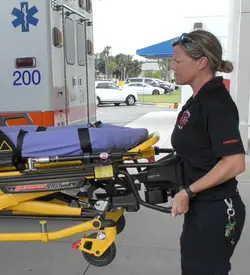
medic with stretcher

ACLS Renewal: Requirements, Megacode, Skills & How to Prepare

If your Advanced Cardiovascular Life Support certification is approaching expiration, completing your ACLS renewal before your current credential expires can help you stay prepared and meet employer requirements.

For many nurses, paramedics, physicians, respiratory therapists, and other healthcare professionals, ACLS renewal is part of maintaining the credentials required for clinical practice.

But what should you expect during an ACLS renewal course? What is the Megacode? Which skills should you review before class?

This guide explains how to prepare for your AHA ACLS renewal and what healthcare professionals should know before recertification.

Finish Strong CPR & Medical Training provides American Heart Association BLS, ACLS, and PALS training options in Orlando, West Palm Beach, Port Saint Lucie, and Stuart, Florida.
What Is ACLS Renewal?

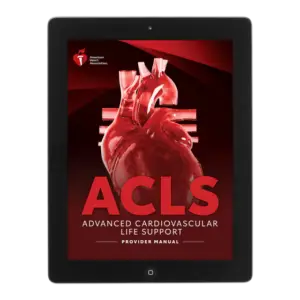
America Heat Association ACLS Provider student manual and bookACLS renewal allows healthcare professionals to refresh and demonstrate their knowledge and skills in advanced cardiovascular life support before their current certification expires.

ACLS builds upon foundational BLS skills and focuses on the recognition and management of cardiovascular emergencies.

Rather than approaching renewal as something you simply need to “get through,” use it as an opportunity to refresh skills you may not regularly perform in your clinical setting.

How Often Do You Need ACLS Renewal?

American Heart Association ACLS Provider course completion cards are valid for **two years through the end of the month in which the

Developer and Managed by Pixel Pop Creatives + Humza Ahmed