

ACLS Algorithm:
What You Need to Know
Advanced Cardiac Life Support Algorithm
Every second counts during a cardiovascular emergency. The ability to assess rapidly, apply ACLS algorithms accurately, and lead a team under pressure can determine patient outcomes. That’s why ACLS certification is essential for healthcare professionals working in emergency, critical care, and acute clinical settings.
Advanced Cardiovascular Life Support (ACLS) goes beyond basic resuscitation. It focuses on recognizing life-threatening arrhythmias, managing cardiac arrest, identifying reversible causes, and delivering evidence-based interventions in high-stress environments. Whether you are completing initial ACLS certification or preparing for ACLS renewal, mastering these protocols ensures you respond with confidence and clinical precision.
In this guide, you’ll find a detailed breakdown of ACLS algorithms, key reversible causes (H’s and T’s), and best practices for staying current with the latest AHA guidelines. Continuous training and regular ACLS renewal help healthcare providers maintain competence, improve team communication, and deliver the highest standard of patient care.
If you are preparing for an ACLS course, skills session, or recertification, this resource will strengthen your understanding and help you approach your next ACLS certification with clarity and confidence.
Understanding the ACLS Algorithm
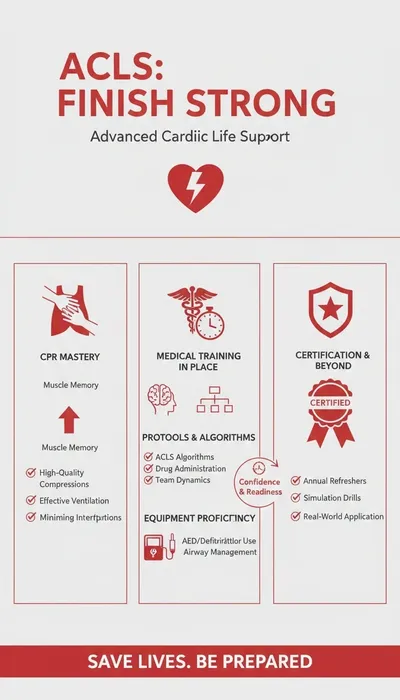
ACLS Algorithm
ACLS (Advanced Cardiovascular Life Support) is a complex, protocol-based care system used to manage cardiovascular emergencies, including cardiac arrest, stroke, and acute coronary syndromes. Advanced Cardiac Life Support (ACLS) is an extension of BLS, offering additional interventions to ensure the patient has the best chance of a successful outcome in an emergency. This happens in seconds and comprises components like early rhythm detection, airway control, medication administration, and effective team dynamics that allow seamless resuscitation.
According to the study by the International Consensus on Cardiopulmonary Resuscitation and Emergency Cardiovascular Care experts (2020), the implementation of standardized, evidence-based ACLS protocols is crucial for improving patient survival and neurological outcomes during cardiac arrest. The goal of ACLS is not just to provide immediate lifesaving care but also to improve long-term survival and neurological function. The American Heart Association has trained millions in lifesaving techniques, including Advanced Cardiovascular Life Support(ACLS), through its ongoing commitment to improving and updating its resuscitation guidelines based on the latest scientific research.
- Key Components of ACLS:
- Airway, Breathing, Circulation (ABC): Ensuring oxygenation and circulation remain top priorities.
- Early Defibrillation: Quick identification and treatment of shockable rhythms.
- Medications: Administer drugs like epinephrine, amiodarone, and atropine based on the patient’s condition.
- Team Dynamics: Effective communication and role delegation during resuscitation.
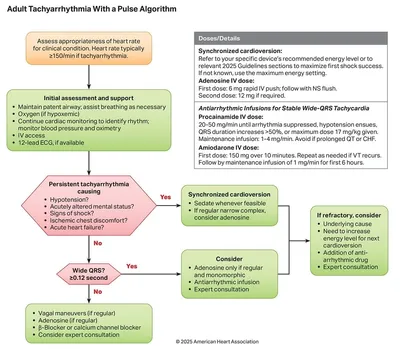
ACLS Algorithms
ACLS Algorithm
Advanced Cardiovascular Life Support Protocols
The ACLS Algorithm provides the systematic approach to treating cardiac arrest, stroke, and other life-threatening emergencies. Reference the latest AHA (American Heart Association) guidelines below.